Membership eligibility for the household
Write down the answer and compare it with the same question asked of another insurer or licensed agent.
Independent guide · Updated September 27, 2026
USAA products have membership eligibility requirements. Confirm that every policyholder and driver qualifies, and compare deployment, storage and relocation needs when relevant.
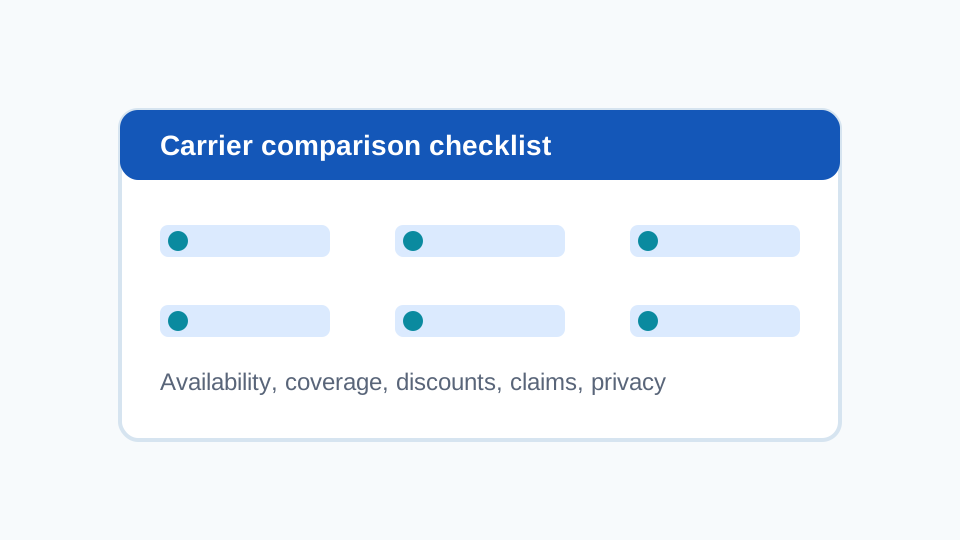
USAA products have membership eligibility requirements. Confirm that every policyholder and driver qualifies, and compare deployment, storage and relocation needs when relevant.
| Comparison field | Why it matters | What to do |
|---|---|---|
| Policy duration | Short-term advertisements may describe a standard policy with flexible billing rather than a one-day contract. | Verify the actual term, cancellation rules and fees. |
| Deductibles | A lower premium may be paired with more out-of-pocket cost after a covered loss. | Compare collision and comprehensive deductibles separately. |
| Filing status | An SR-22 or similar filing is proof of financial responsibility, not a separate coverage type. | Confirm who files it, the effective date and how lapses are reported. |
| Carrier licensing | A familiar brand name does not replace state licensing and product availability checks. | Verify the underwriting company and producer with the state regulator. |
| Garaging address | The overnight location is often more important than a mailing address and must be reported accurately. | Use the same real garaging address on every quote. |
| Annual mileage | Commuting, remote work and seasonal use can materially change stated mileage. | Use a current odometer-based estimate rather than a guess. |
| Comprehensive scope | Comprehensive commonly addresses theft, weather, animal and glass losses, subject to the contract. | Compare covered causes, glass treatment and deductible. |
| Platform coverage | A rideshare or delivery platform’s protection may apply only during defined app periods. | Map each app period to personal, endorsement and platform coverage. |
Write down the answer and compare it with the same question asked of another insurer or licensed agent.
Write down the answer and compare it with the same question asked of another insurer or licensed agent.
Write down the answer and compare it with the same question asked of another insurer or licensed agent.
Write down the answer and compare it with the same question asked of another insurer or licensed agent.
Check state and ZIP availability, then record the exact underwriting company.
Confirm licensing and use the regulator’s consumer or complaint resources.
Review the quote, declarations page, policy form, exclusions and endorsements together.
Use one real garaging address, the same drivers, VIN, annual mileage and vehicle use on every request.
Keep liability limits, optional benefits and collision and comprehensive deductibles identical.
Convert each result to the same policy term and include installment fees or the amount due to start.
Identify the underwriting company, remaining record checks, effective date and documents provided.
Bind replacement coverage and save proof before cancelling an existing policy.
Compare evidence, not brand familiarity
| Area | What to collect | Why it matters |
|---|---|---|
| Availability | State, driver and vehicle eligibility | A national brand may not offer every product in every state. |
| Price | Total policy-term premium, fees and payment schedule | A monthly figure can hide term length or installment costs. |
| Protection | Limits, deductibles, endorsements and exclusions | Two quotes are not comparable until the protection matches. |
| Service model | Direct, local agent, independent agent or mixed channel | The way you buy can affect how policy changes are handled. |
| Claims process | Reporting options, repair process and rental handling | Service after a loss can matter more than the sales experience. |
| Company identity | Exact underwriting entity and state license | Group names and legal insurance companies are not always identical. |
Describe a feature only when it is available for the relevant state, policy and applicant. Link to the current company document when possible.
Avoid universal claims such as “best,” “cheapest” or “fastest” unless a current, transparent method supports the comparison.
Requirements, company availability and policy forms can change. Verify legal rules with the state regulator and confirm coverage in the insurer’s current policy documents.
Last reviewed September 27, 2026. See our editorial policy, comparison method and corrections process.