Find it on a trusted record
Use the vehicle, registration, title, purchase documents or current insurance records. Copy all 17 characters carefully for modern vehicles.
Car insurance guide · Updated October 21, 2026
A VIN identifies the specific vehicle, but a fair quote still depends on drivers, garaging, use, coverage and underwriting.
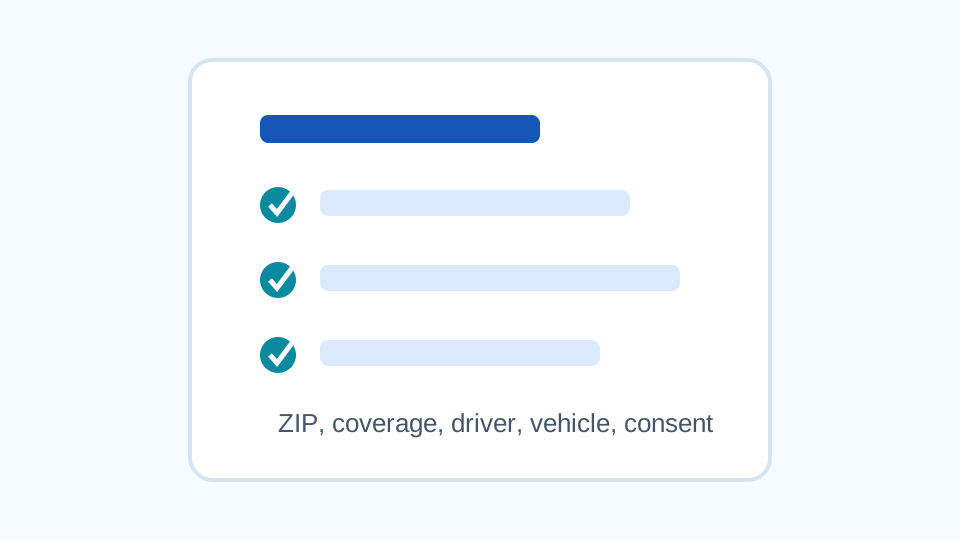
A vehicle identification number identifies a specific vehicle. A preliminary estimate may begin with only year, make and model, but an insurer can request the VIN before producing a firm offer or binding coverage. The VIN can help confirm the vehicle configuration and reduce mistakes between similar trims.
| Stage | Information commonly used | What to verify |
|---|---|---|
| Early estimate | ZIP code, drivers, year, make, model and use | Whether the result is an estimate or an underwritten offer |
| Detailed quote | VIN, driver records, mileage, ownership and requested coverage | Vehicle trim, safety equipment and every listed driver |
| Binding | Completed application, payment and required documents | Effective date, underwriting company and proof of coverage |
Use the vehicle, registration, title, purchase documents or current insurance records. Copy all 17 characters carefully for modern vehicles.
Before entering a VIN, confirm the site, agency or insurer and read who receives the application. A VIN is not a password, but it is still vehicle-specific information.
The NHTSA decoder can help identify how a VIN was encoded. An insurer remains responsible for its underwriting and vehicle classification.
Use the same VIN, drivers, garaging location, mileage, ownership status, limits and deductibles with every company.
The VIN does not replace the driver, household, garaging, mileage, vehicle-use or coverage questions. It also does not prove that a displayed premium is final. Ask what record checks remain, whether the quote can change before binding, and which legal insurance company would issue the policy.
Check the year, make, model, trim and ownership information returned in the quote.
Use identical liability limits, collision and comprehensive deductibles, and optional benefits.
Record the underwriting entity and confirm its state license.
Do not treat a quote reference as proof of insurance. Save the binder or declarations page after coverage is confirmed.
Rules, policy forms and company practices change. Use these resources as a starting point and confirm the current contract and state requirements.
Updated October 21, 2026. See our editorial policy, comparison method and corrections process.